Not All Makhana Is the Same
Posted by: Team Makaroot / On: February 28, 2026 / In: Founders Journal , Makhana Quality , Food Education
Big, white, and shiny doesn’t always mean better. Here’s what we learned about makhana quality, grading, and what truly matters beyond appearance.
Not All Makhana Is the Same
From the outside, makhana looks simple
Round. White. Light.
Most of us assume it’s all the same. If it looks clean and puffy, it must be good — right?
That’s what we thought too.
Until we started paying attention.
The truth is, not all makhana is equal. And the differences aren’t always visible at first glance.
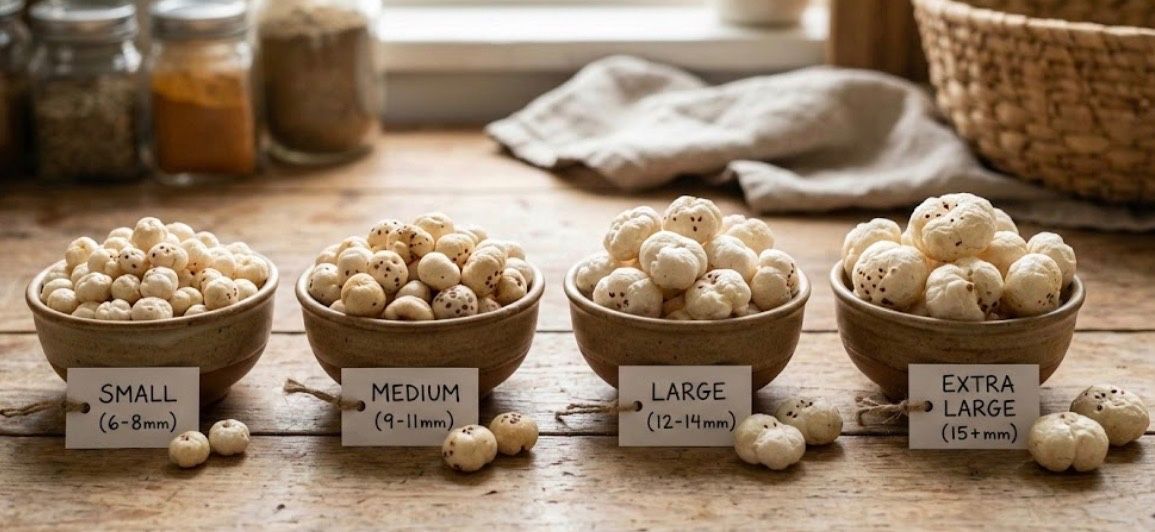
There are grades. Sizes. Textures. Variations in density. Some seeds expand beautifully when roasted. Others stay hard at the center. Some carry a natural sweetness. Others taste flat.
And here’s something we learned quickly — bigger doesn’t always mean better.
Size is influenced by variety and processing. But quality? That depends on how carefully it’s harvested, dried, popped, and stored.
We saw batches that looked perfect but felt hollow.
We saw smaller seeds that had better crunch and depth of flavour.
Appearance can mislead.
Another factor is moisture. Too much, and the makhana loses its crispness quickly. Too little, and it becomes fragile. Storage conditions change everything.
The more we understood this, the clearer our responsibility became.
If we were going to build Makaroot, we couldn’t rely on surface impressions. We had to understand the seed fully — how it behaves when roasted, how it holds flavour, how it feels when you bite into it.
Quality is not just about grading charts.
It’s about consistency.
It’s about respect for process.
It’s about not cutting corners when no one is watching.
In a market where packaging can distract from substance, we’ve chosen something simpler — know the source, understand the batch, and choose carefully.
Because when someone opens a pack of makhana, what they experience should reflect everything that happened before it.
Next week, we step into the process of popping — where raw makhana transforms, and craftsmanship makes all the difference.
— Team Makaroot 🌱